
Identify the materials
Review the surface, paint or ink and any existing coating before selecting a removal method.
Available 24/7Emergency call-out · Speak to a specialist
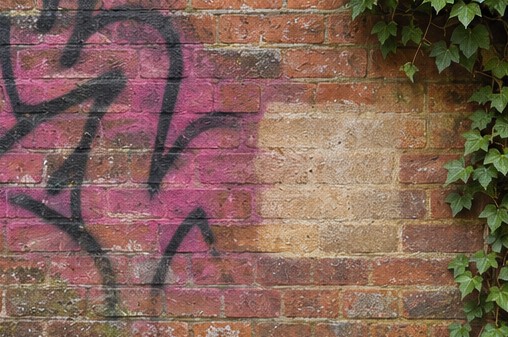 SERVICE ILLUSTRATION
Graffiti removal is a material-sensitive process, especially on porous masonry or previously coated surfaces. We assess the paint or ink, substrate condition and existing finish before selecting a suitable trial and cleaning method. The proposed work explains protection needs, the achievable result and any potential for residual staining or surface variation.
Graffiti removal is a surface-restoration task, not a choice of the strongest remover available. Paint, ink and adhesive residues interact differently with brick, stone, metal, glass and previously coated finishes. Our team considers both the marking and the material beneath it, then agrees a suitable trial so the likely result and the risk of altering the original finish are understood before wider treatment.
The desired outcome is an improvement that respects the surrounding surface. Porous materials or earlier unsuccessful cleaning can leave a residual shadow even when the main coating has been removed. We explain those limitations, protect adjacent areas and distinguish removal work from any optional protective coating, so the quotation describes a complete and realistic scope rather than promising invisible results on every substrate.
The precise methods, access requirements and deliverables are agreed for your project. These are the areas we can discuss.
Review the surface, paint or ink and any existing coating before selecting a removal method.
Use suitable specialist products or steam cleaning where appropriate, checking the material’s response during the work.
Consider an appropriate protective coating where suitable, with clear limitations and maintenance expectations for that surface.
Methods are selected for the materials, conditions and agreed purpose of the visit.
Review the affected area, apparent paint or ink type, underlying coating and previous removal attempts. Where the building material or protected status requires particular care, this is identified before selecting products or considering an appropriate steam-cleaning option.
A representative small area helps assess cleaning response and possible changes in colour, texture or sheen. The agreed method balances removal of the unwanted marking with protection of the original surface, and the trial establishes realistic expectations for the wider area.
After removal, we explain any residual shadowing and consider whether a compatible protective coating is worthwhile. Its appearance, maintenance and future cleaning requirements should be assessed as a separate specification rather than assuming every surface needs the same finish.
The quotation confirms the work and any reporting or verification included. These are the outputs to discuss.
A defined removal area and recorded trial outcome where included.
An agreed material-compatible method with any anticipated appearance limitations.
Completion observations and a separate protection recommendation where appropriate.
Useful terms you may see in the specification or findings.
No. Paint penetration, the substrate and previous treatments can affect the finish. We assess the surface and explain the likely limitations rather than promising a universal result.
It is useful to provide photographs and details of anything already applied. Unselected products may affect the original finish or complicate later treatment, so a suitable trial is preferable to assuming one household remover will suit every material.
Yes. Removing graffiti may also expose cleaner material beneath surrounding weathering. We discuss the treatment boundary and any wider blending or cleaning separately, so a larger area is not included without agreement.
Mr Flood supports homeowners, landlords, managing agents and commercial clients. The scope, quotation and any reporting requirements are discussed for the individual job.
Read customer reviewsSend the postcode, a short description and photos where safe. We’ll help identify the appropriate next step.
No automatic booking or commitment.
 Amy · Mr FloodFind your service
Need help choosing a service? Browse all services or email the Mr Flood team.