
Clarify the requirement
Identify the source or area of interest and confirm what the proposed equipment and survey can assess.
Available 24/7Emergency call-out · Speak to a specialist
 SERVICE ILLUSTRATION
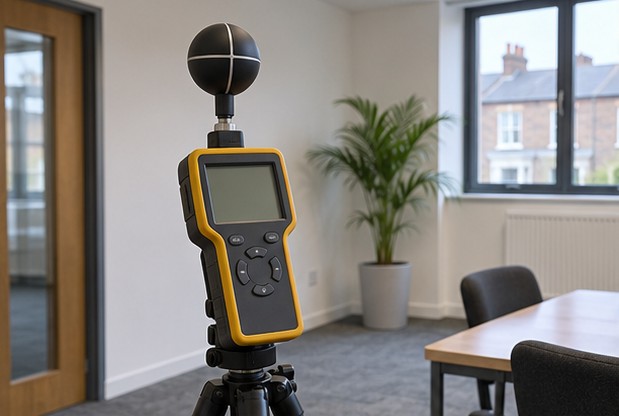
An electromagnetic-field enquiry needs a clearly defined measurement brief. We establish the type of field of concern, relevant locations and the purpose of the investigation before confirming suitable instrumentation and scope. Recorded conditions and stated equipment limitations keep the findings factual; the survey is not a medical assessment, an ionising-radiation inspection or a blanket safety certificate.
A meaningful measurement starts with a precise brief: the source of interest, the type of field and the question the result needs to answer. Low-frequency electric and magnetic fields, radiofrequency signals and ionising radiation are different subjects. One handheld reading cannot characterise them all. We confirm the proposed measurement capability before accepting a scope, and identify enquiries that require a different specialist or method.
The value of a scoped survey is a factual, reproducible record rather than a dramatic label attached to a number. Readings need their units, location, source operating conditions and instrument limitations. Where a reference or comparison is appropriate, its applicability must be clear. Results do not establish the cause of symptoms, provide medical advice or automatically satisfy a formal workplace exposure-assessment requirement.
The precise methods, access requirements and deliverables are agreed for your project. These are the areas we can discuss.
Identify the source or area of interest and confirm what the proposed equipment and survey can assess.
Take readings at the agreed locations, with the survey conditions and measurement limitations clearly recorded.
Present the results within the agreed scope and identify where a different specialist assessment may be needed.
Methods are selected for the materials, conditions and agreed purpose of the visit.
Discuss the equipment or location causing concern and establish which physical quantity is relevant. Confirm the meter’s suitable range and the proposed survey method before booking. Requests involving radon or other ionising radiation need a separately defined, appropriate method rather than an assumption that an EMF meter is sufficient.
Agree measurement positions, relevant source settings and the timing of observations. Document the instrument and displayed units alongside readings. Where conditions vary, explain whether repeat measurements or specialist monitoring would add information that a short visit cannot provide.
Present findings in relation to the agreed question and any appropriate reference framework. Distinguish measured conditions from unmeasured frequencies, locations or operating states. If the request needs regulatory exposure assessment, engineering design or specialist radiation protection input, identify that requirement clearly.
The quotation confirms the work and any reporting or verification included. These are the outputs to discuss.
A confirmed measurement brief and instrument capability statement.
A location-based record with units and relevant operating conditions.
An explanation of limitations and any specialist next step.
Useful terms you may see in the specification or findings.
No. Measurements are not a medical diagnosis or a blanket safety certificate. The equipment, scope and interpretation must be appropriate to the particular question.
No. The presence of a field is not itself a risk conclusion. Interpretation depends on what is measured, its magnitude, frequency and circumstances, using an appropriate assessment basis rather than the fact that a meter responds.
Not automatically. Any proposed mitigation needs an appropriate technical assessment of the actual source and requirements. Electrical work and specialist protection design are separate from a defined measurement record and should not be improvised from a single reading.
Mr Flood supports homeowners, landlords, managing agents and commercial clients. The scope, quotation and any reporting requirements are discussed for the individual job.
Read customer reviewsSend the postcode, a short description and photos where safe. We’ll help identify the appropriate next step.
No automatic booking or commitment.
 Amy · Mr FloodFind your service
Need help choosing a service? Browse all services or email the Mr Flood team.