
Assess residues and materials
Review the visible damage, affected surfaces and accessible contents before agreeing a suitable restoration and cleaning scope.
Available 24/7Emergency call-out · Speak to a specialist
 SERVICE ILLUSTRATION
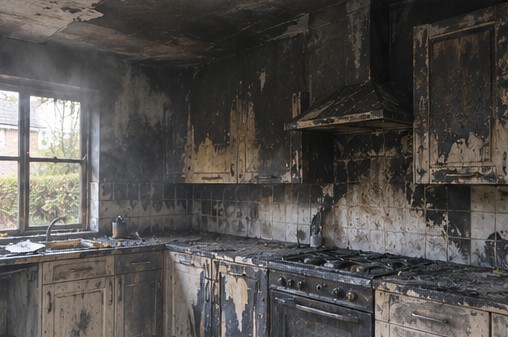
Fire recovery begins beyond the visibly burnt area. Once access has been authorised, we assess smoke residues, soot deposition, affected contents and any firefighting-water damage. Material-sensitive cleaning trials, appropriate air management and source-led odour treatment inform a coordinated restoration plan, with the scope and limitations explained before work proceeds.
Immediate danger or an active fire? Call 999. Mr Flood provides restoration and cleanup, not emergency-service rescue or firefighting.
Fire recovery involves more than the area directly burned. Smoke residues may settle on surfaces and contents elsewhere, while water used during firefighting can introduce a separate drying requirement. Once safe access has been authorised, we assess visible residue distribution, material condition and the practical restoration priorities. Uncertain structural conditions or damaged services need the appropriate specialist before affected areas are worked on.
Cleaning methods are selected for the residue and the surface rather than applied as a single treatment throughout. Painted finishes, porous contents and delicate materials can respond differently. Our scope can combine controlled residue removal, cleaning trials, contents assessment and suitable odour treatment. Repair or redecorating decisions follow that assessment, with items requiring a conservator or another specialist identified rather than experimentally treated.
These are scope options, not automatic inclusions in every visit. The relevant tasks, access, specialist attendance and responsibilities are agreed before booking the work.
After authorised access, the recovery brief can identify a need for temporary boarding-up or other protection before cleaning and reinstatement. The responsible specialist, access and exact work are confirmed separately; temporary protection is distinct from permanent reinstatement and is not a firefighting service.
The precise methods, access requirements and deliverables are agreed for your project. These are the areas we can discuss.
Review the visible damage, affected surfaces and accessible contents before agreeing a suitable restoration and cleaning scope.
Select cleaning and filtration methods for the residues and materials, with treatment trials where appropriate.
Consider smoke-odour treatment alongside source cleaning, then identify repairs and redecoration required after the restoration stage.
Methods are selected for the materials, conditions and agreed purpose of the visit.
Document accessible fire, smoke, soot and water-affected areas, including routes into adjacent rooms. Consider sensitive contents and clean-area protection. The agreed plan identifies which surfaces can be trial-cleaned, which need replacement assessment and which remain outside authorised access.
Use suitable dry particulate removal, HEPA-filtered equipment and surface-specific cleaning methods where appropriate. Small treatment trials help assess compatibility before wider application. Residues are removed in a controlled sequence so cleaning does not simply move soot onto adjacent finishes or contents.
Reassess remaining odour after source cleaning and consider supplementary treatment only where justified. Identify retained contaminated materials, water-related drying needs and any required sealing or redecoration. Sensitive or valuable items may need a separate specialist restoration brief before a decision is made.
The quotation confirms the work and any reporting or verification included. These are the outputs to discuss.
An agreed smoke, soot and water-damage restoration scope.
A record of treatment trials and relevant material decisions.
A cleaning handover with remaining odour and repair priorities.
Useful terms you may see in the specification or findings.
This is an after-fire restoration service, not firefighting. For an active fire or immediate danger, leave the area and call 999. Restoration is considered once access is safe and authorised.
Odour treatment is planned around source removal. Deposits or contaminated materials left in place may continue to release smells. We first consider cleaning and material condition, then decide whether a supporting treatment adds value.
Tell us about them before work starts. Specialist electronics, artworks and heritage objects may require a dedicated restorer or conservator. Their inclusion is assessed separately; a general room-cleaning scope should not be assumed to cover them.
Mr Flood supports homeowners, landlords, managing agents and commercial clients. The scope, quotation and any reporting requirements are discussed for the individual job.
Read customer reviewsSend the postcode, a short description and photos where safe. We’ll help identify the appropriate next step.
No automatic booking or commitment.
 Amy · Mr FloodFind your service
Need help choosing a service? Browse all services or email the Mr Flood team.