

Identify the concern
Review reported sightings, signs and affected areas before deciding what inspection or treatment approach is appropriate.
Available 24/7Emergency call-out · Speak to a specialist
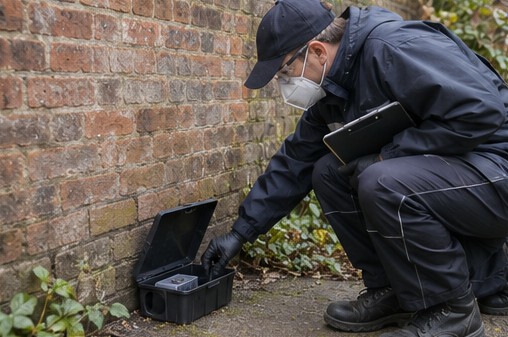 SERVICE ILLUSTRATION
Effective infestation work starts with identifying the activity and understanding the property conditions. We review reported sightings, evidence and affected locations before agreeing an appropriate inspection, targeted control or post-infestation cleaning scope. Exclusion, housekeeping and contamination-removal needs are considered alongside treatment, with species-specific restrictions and any specialist requirements made clear.
Immediate danger or an active fire? Call 999. Mr Flood provides restoration and cleanup, not emergency-service rescue or firefighting.
Effective pest work begins by identifying what is present and why the property is supporting it. A sighting, noise or isolated dropping may be useful evidence, but it is not a complete treatment specification. Our enquiry and assessment process considers reported signs, affected locations, property use and access so that the next step is directed at the actual concern rather than a guessed species.
The proposed response can involve a combination of suitable control, exclusion, hygiene improvement and follow-up observation. Species-specific restrictions, product instructions and the competence required for the work must be considered before treatment is agreed. Where infestation has left contamination or damaged finishes, cleaning and restoration are scoped separately, giving owners a joined-up view of the property work without assuming one treatment will prevent every future recurrence.
These are scope options, not automatic inclusions in every visit. The relevant tasks, access, specialist attendance and responsibilities are agreed before booking the work.
Describe signs of rodents, bed bugs, fleas, flies, cockroaches, ants or moths so the correct inspection can be considered. Identification, occupancy and site conditions determine suitable control options; treatment competence, product suitability and any specialist attendance are confirmed before work is arranged.
Entry-point exclusion, deterrents and post-infestation cleaning may be separate parts of the plan. Reports involving birds, squirrels, foxes or other wildlife need species-specific and legal checks rather than an assumption that an animal can be removed. No particular wildlife intervention is promised from an online enquiry alone.
The precise methods, access requirements and deliverables are agreed for your project. These are the areas we can discuss.
Review reported sightings, signs and affected areas before deciding what inspection or treatment approach is appropriate.
Consider suitable control, exclusion or deterrent measures, subject to the species, site assessment and any relevant restrictions.
Discuss removal of contamination and practical property measures where these form part of the agreed follow-on work.
Methods are selected for the materials, conditions and agreed purpose of the visit.
Review the available evidence and accessible affected areas, including potential food, shelter and entry points. Uncertainty about identification is kept visible so that an appropriate inspection or specialist input can be arranged before committing to a control method.
Agree suitable measures for the identified species and location, taking account of occupants, pets and other non-target wildlife. Any treatment requiring particular competence or permissions must be handled accordingly; an initial enquiry does not imply that every pest can be treated by the same approach.
Discuss proofing, cleaning and practical property maintenance where relevant. Follow-up observations can help distinguish continuing activity from historic evidence, while any contaminated contents, waste or finishes are assessed for a separately agreed cleaning or removal programme.
The quotation confirms the work and any reporting or verification included. These are the outputs to discuss.
An assessment summary identifying the reported signs and remaining uncertainties.
A targeted treatment or specialist-referral scope with relevant preparation instructions.
Recommendations for proofing, hygiene and any agreed follow-up checks.
Useful terms you may see in the specification or findings.
Identification and site conditions may need checking first. Different pests and locations require different approaches, so the treatment scope is confirmed after the relevant assessment.
Clear photographs of accessible signs and a description of their location can help direct the enquiry. They do not always establish the species or extent, so a site assessment may still be needed before a treatment proposal.
Only when included in the agreed scope. Control, contamination cleaning, waste removal and repairs are distinct tasks; the quotation should identify which are commissioned and which remain recommendations for a later stage.
Mr Flood supports homeowners, landlords, managing agents and commercial clients. The scope, quotation and any reporting requirements are discussed for the individual job.
Read customer reviewsSend the postcode, a short description and photos where safe. We’ll help identify the appropriate next step.
No automatic booking or commitment.
 Amy · Mr FloodFind your service
Need help choosing a service? Browse all services or email the Mr Flood team.