

Review existing ventilation
Look at the rooms affected, existing extract arrangements and environmental conditions before proposing changes to the ventilation system.
Available 24/7Emergency call-out · Speak to a specialist
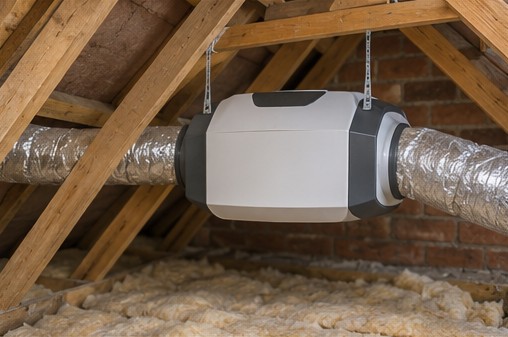 SERVICE ILLUSTRATION
Ventilation should suit the home, its occupants and the way moisture is generated. We review the property layout, existing extraction and indoor conditions before considering Positive Input Ventilation or other suitable measures. The proposal explains the installation, operating arrangements and maintenance needs, while keeping leaks and other moisture defects within the investigation.
Persistent condensation needs a whole-property view of moisture generation, air exchange and surface temperatures. A bathroom fan, background vents and a PIV unit perform different roles, so simply adding another fan is not always a complete answer. We review the affected rooms and existing arrangements to identify a suitable ventilation approach, while keeping leaks and rainwater defects separate from indoor humidity control.
Positive Input Ventilation introduces filtered air into a dwelling to support air movement and dilute moisture-laden indoor air. Suitability depends on the property, air source, airflow routes and the chosen system. Local extraction remains important where moisture is generated. An agreed installation therefore includes consideration of layout and operating requirements, with clear handover information so the occupier can use and maintain the system properly.
The precise methods, access requirements and deliverables are agreed for your project. These are the areas we can discuss.
Look at the rooms affected, existing extract arrangements and environmental conditions before proposing changes to the ventilation system.
Consider Positive Input Ventilation or extraction improvements according to the building layout and the assessed requirements.
Agree the installation scope and explain the operating and maintenance information relevant to the chosen system.
Methods are selected for the materials, conditions and agreed purpose of the visit.
Review affected surfaces, occupancy patterns and the operation of current fans and vents. Environmental measurements help describe conditions during the assessment. Cold surfaces, restricted airflow and moisture generation are considered together, rather than assuming every mould patch indicates a need for the same ventilation product.
Consider loft or wall-mounted options where appropriate, proposed supply locations, air paths and existing extraction. Confirm the installation requirements of the selected product and the agreed electrical arrangements. Recommendations distinguish whole-home air supply from local removal of moisture at kitchens and bathrooms.
Complete the agreed installation and appropriate operational checks, then explain controls, filter maintenance and ventilation routes that should remain available. Where a follow-up assessment is included, review how the system operates in use; one reading immediately after installation does not describe every seasonal condition.
The quotation confirms the work and any reporting or verification included. These are the outputs to discuss.
A property-specific ventilation recommendation and installation scope.
Selected-system operating and maintenance information.
Agreed installation checks and any follow-up review arrangements.
Useful terms you may see in the specification or findings.
No. Ventilation may help manage indoor moisture, but it does not repair a leak or an external water-entry defect. Those causes need to be assessed separately.
Usually the existing extraction strategy remains relevant. PIV and local extraction serve different purposes. We consider them together and explain any proposed changes rather than assume a new supply system makes every existing fan unnecessary.
It may help address the moisture conditions supporting growth, but existing contamination needs its own assessment and cleaning scope. Damaged materials, active leaks and external defects are not repaired by installing ventilation.
Mr Flood supports homeowners, landlords, managing agents and commercial clients. The scope, quotation and any reporting requirements are discussed for the individual job.
Read customer reviewsSend the postcode, a short description and photos where safe. We’ll help identify the appropriate next step.
No automatic booking or commitment.
 Amy · Mr FloodFind your service
Need help choosing a service? Browse all services or email the Mr Flood team.