

Define the question
Clarify what the testing is intended to establish and whether sampling will add useful information to the inspection.
Available 24/7Emergency call-out · Speak to a specialist
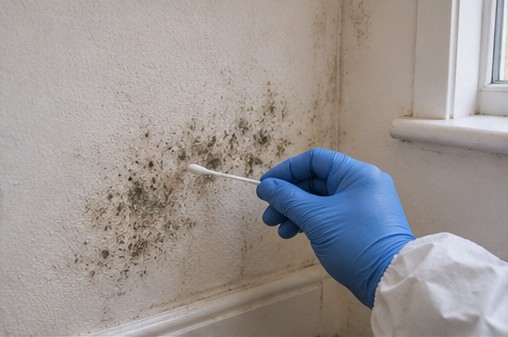 SERVICE ILLUSTRATION
Useful mould testing begins with a defined question, not an unexplained sample result. We discuss the concern, agree appropriate sample locations and methods, and record the conditions that give the results meaning. Findings are considered alongside visible growth and moisture evidence, with clear limits on what the sampling can establish and which remedial decisions it can support.
Testing is most valuable when it answers a defined question that inspection alone cannot resolve. Visible growth consistent with mould can justify moisture investigation and proportionate remediation without waiting for species identification. Colour or a photograph cannot identify the species or establish a health risk. We discuss why a sample is being requested, how its result might change the next decision and whether a surface or air-sampling approach is appropriate. Sampling is separately agreed rather than automatically bundled into a standard survey.
A sample is a record of a particular location and set of conditions, not a complete description of the entire building. Surface sampling and airborne sampling answer different questions and should not be treated as interchangeable. Reported laboratory findings are reviewed alongside visible condition, moisture history and the collection method, with any uncertainty explained. The result supports property decisions; it does not diagnose illness or establish a personal exposure history.
The precise methods, access requirements and deliverables are agreed for your project. These are the areas we can discuss.
Clarify what the testing is intended to establish and whether sampling will add useful information to the inspection.
Take samples from the agreed locations for analysis, recording the context and conditions relevant to those samples.
Explain the reported findings alongside visible conditions and moisture evidence, with recommendations for any further property work.
Methods are selected for the materials, conditions and agreed purpose of the visit.
Clarify whether the concern relates to a visible material, an uncertain deposit, a particular room or an agreed post-remediation check. Confirm the analytical method and reporting scope before collection. Where inspection already provides the necessary evidence, explain when additional sampling is unlikely to change the recommendation.
Identify each agreed sampling location and record relevant conditions, including recent cleaning or treatment. Use the selected collection method and laboratory submission requirements. Air sampling, where specifically arranged, needs a sampling strategy and contextual information rather than an unexplained isolated spore count.
Present the laboratory result with the location, method and question it addresses. Distinguish detected material from conclusions about concealed growth or the whole property. Link findings to any recommended moisture investigation, source removal or further sampling, without assigning a universal pass mark to every building.
The quotation confirms the work and any reporting or verification included. These are the outputs to discuss.
An agreed sampling objective, locations and analytical scope.
Sample identifiers and the corresponding laboratory findings.
A contextual explanation with practical property recommendations.
Useful terms you may see in the specification or findings.
No. Property sampling describes the samples and conditions assessed. It cannot diagnose a person’s illness or prove that a particular exposure caused symptoms.
No. Where growth is visible, the immediate property priorities may already be clear: identify moisture and agree appropriate remediation. Testing is proposed when a defined result would add useful evidence or meet an agreed verification objective.
No. It describes the material or air sampled using that method at that time. Unsampled rooms, concealed construction and changing conditions remain outside what that individual result can establish.
Mr Flood supports homeowners, landlords, managing agents and commercial clients. The scope, quotation and any reporting requirements are discussed for the individual job.
Read customer reviewsSend the postcode, a short description and photos where safe. We’ll help identify the appropriate next step.
No automatic booking or commitment.
 Amy · Mr FloodFind your service
Need help choosing a service? Browse all services or email the Mr Flood team.