

Build the cleaning brief
Define the rooms, surfaces and cleaning priorities, including any access restrictions or business operating requirements.
Available 24/7Emergency call-out · Speak to a specialist
 SERVICE ILLUSTRATION
A well-specified property clean makes the finish and the boundaries clear from the outset. We assess the rooms, surface types, soiling and occupancy needs, then agree the preparation, cleaning methods and access arrangements. Particular attention is given to affected areas and follow-on requirements, with specialist restoration or contamination work identified separately where needed.
A well-specified clean starts with a clear understanding of how the property is used. A home being prepared for reoccupation, a working office and an end-of-tenancy handover can require quite different priorities. An agreed brief may cover post-builders or post-construction cleaning, a one-off deep clean or regular maintenance. Our team defines the rooms, surfaces, access arrangements and expected finish so you can see what is included, what needs specialist attention and how the work fits around occupants or business activity.
The detail matters as much as the room list. Floor finishes, painted joinery, glazed partitions, washroom fittings and kitchen surfaces can need different products and methods. We distinguish ordinary soil removal from any separately specified disinfection, odour treatment or restoration. This makes the quotation useful for comparing scope and avoids assuming that a general clean automatically includes every difficult stain, high-level surface or contaminated material.
These are scope options, not automatic inclusions in every visit. The relevant tasks, access, specialist attendance and responsibilities are agreed before booking the work.
Define the rooms, cupboards, appliances and fittings to be cleaned, with kitchens, ovens, washrooms, accessible joinery and window or frame cleaning included only where listed in the schedule. Occupancy, furniture movement and access restrictions shape a practical room-by-room brief.
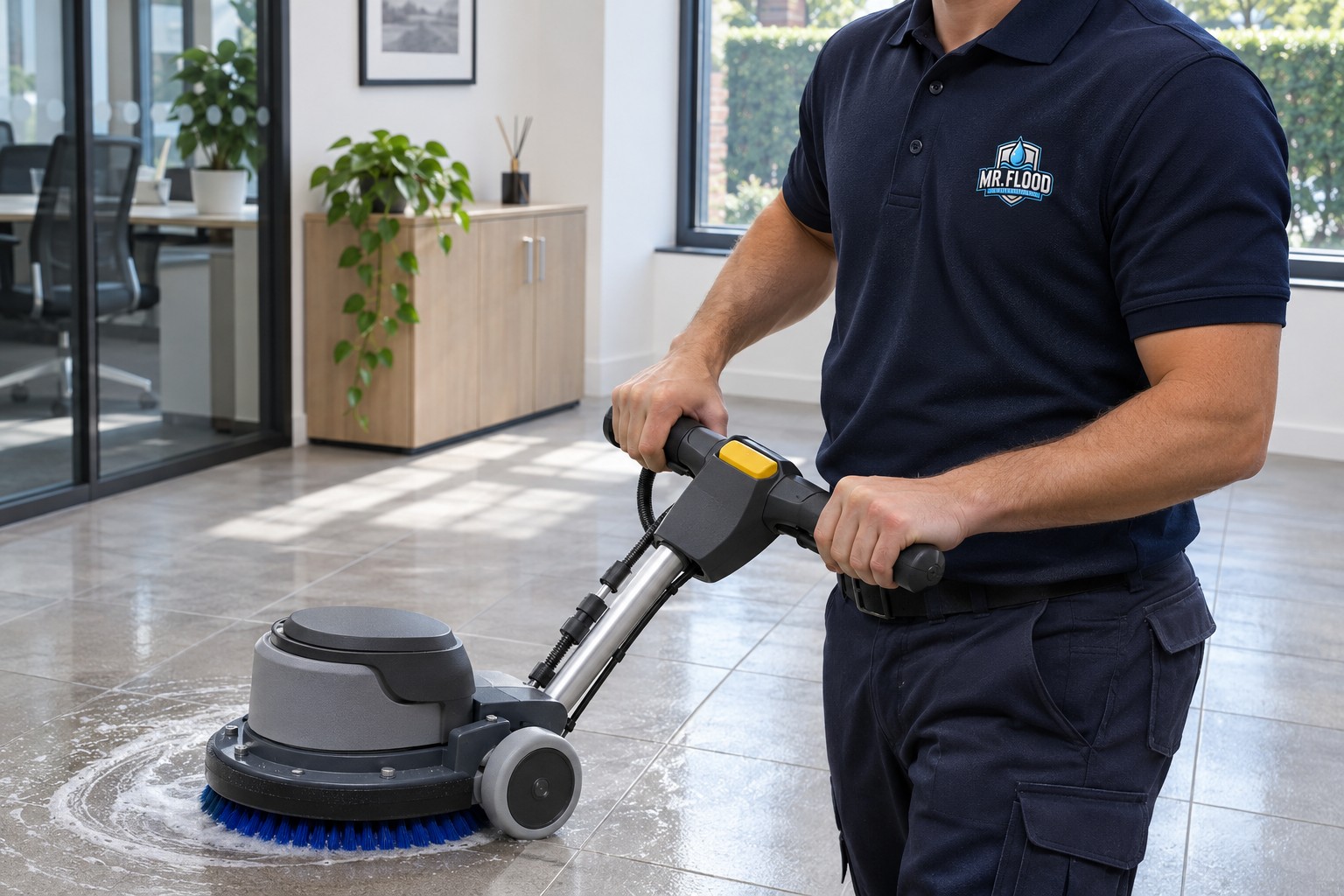
Hard-floor cleaning, buffing or polishing is specified around the floor material, existing coating and finish expectations. A suitable test area helps distinguish recoverable soiling from wear or permanent damage; cleaning does not automatically include sanding, recoating or floor replacement.
Assess tile, grout and adjoining sealants before selecting a compatible clean. The work distinguishes surface soiling from damaged grout, failed seals or water beneath the finish, so any regrouting, seal replacement or moisture investigation is considered as a separate remedial task.
The precise methods, access requirements and deliverables are agreed for your project. These are the areas we can discuss.
Define the rooms, surfaces and cleaning priorities, including any access restrictions or business operating requirements.
Address the agreed dust, dirt, grease or surface soiling with methods selected for the materials involved.
Define any hard-floor cleaning, buffing or polishing, tile and grout cleaning, carpet care or odour treatment separately, with material suitability and finish expectations agreed first.
Methods are selected for the materials, conditions and agreed purpose of the visit.
Agree the accessible areas, fixtures, furniture and priorities, including high-touch points where relevant. Opening hours, keys, sensitive equipment and items not to be moved are identified so the team can work to a practical brief with clear boundaries.
Visible dust, grease and other deposits are addressed using suitable surface-cleaning methods. Trial areas can resolve uncertainty around delicate finishes; where disinfection is specified, the selected product’s intended use, preparation requirements and contact conditions shape that additional stage.
The work is checked against the cleaning schedule rather than an undefined promise of perfection. Remaining permanent marks, inaccessible areas or defects are distinguished from outstanding cleaning, and any separately needed carpet care or remedial works are clearly identified.
The quotation confirms the work and any reporting or verification included. These are the outputs to discuss.
A defined room, surface and task schedule attached to the agreed scope.
A completion record noting exceptions or areas that could not be accessed.
Aftercare or separate specialist recommendations where the assessment identifies them.
Useful terms you may see in the specification or findings.
Tell us the hours and access requirements when you enquire. Scheduling is confirmed for the agreed job rather than assumed from the enquiry.
A room list, photographs, surface types and the tasks that matter most are useful starting points. Please identify heavy soiling, restricted access and furniture that must stay in place so the proposal reflects the actual property rather than a generic room count.
A visual completion check can be agreed, with ATP hygiene testing quoted separately where useful. ATP results relate to sampled surfaces and the testing method; they do not certify that the entire building is pathogen-free.
Mr Flood supports homeowners, landlords, managing agents and commercial clients. The scope, quotation and any reporting requirements are discussed for the individual job.
Read customer reviewsSend the postcode, a short description and photos where safe. We’ll help identify the appropriate next step.
No automatic booking or commitment.
 Amy · Mr FloodFind your service
Need help choosing a service? Browse all services or email the Mr Flood team.