

Review the contents
Identify materials, condition and the type of damage before selecting items for the agreed cleaning scope.
Available 24/7Emergency call-out · Speak to a specialist
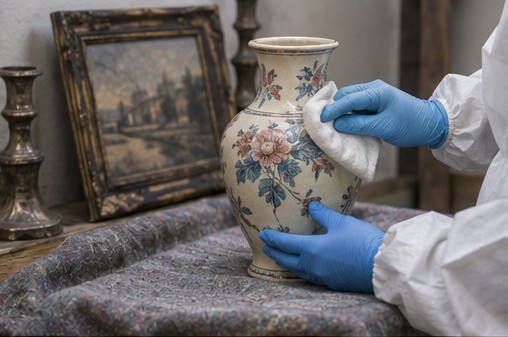 SERVICE ILLUSTRATION
Contents recovery begins with a careful decision about each item’s material, condition and contamination. We assess belongings affected by water, smoke, mould or odour and discuss suitable cleaning or restoration options. Agreed records distinguish items selected for treatment from those needing specialist referral, further assessment or an authorised replacement decision.
After a flood, fire or contamination incident, the contents of a property deserve an item-by-item decision. Material, construction, condition and the type of exposure can all influence whether cleaning is practical. Our team helps define the agreed contents scope, separating belongings selected for treatment from those needing specialist assessment, a replacement decision or further information before any irreversible action is taken.
A washable hard item, upholstered chair and delicate keepsake should not be treated as interchangeable. We consider accessible contamination, finish sensitivity and any associated drying or odour work, with attention to how belongings will be identified and handled. The resulting plan gives owners and authorised representatives a clear basis for deciding what to retain, what to investigate and which cleaning stages they wish to commission.
These are scope options, not automatic inclusions in every visit. The relevant tasks, access, specialist attendance and responsibilities are agreed before booking the work.
The assessment can include suitable furniture, rugs, curtains and other belongings affected by smoke, water, mould or odour. Each material is considered for cleaning, drying or referral, with identification and handling arrangements agreed before items are moved or treated.
Books, documents, artwork, electronics and appliances can need a different conservator, repairer or testing specialist. We can identify these within the contents assessment and discuss a separately agreed recovery or referral route. Appearance or drying alone does not establish electrical safety or guarantee recovery of a delicate item.
The precise methods, access requirements and deliverables are agreed for your project. These are the areas we can discuss.
Identify materials, condition and the type of damage before selecting items for the agreed cleaning scope.
Consider suitable cleaning, drying and odour-treatment options for the contents assessed, rather than one process for everything.
Explain the work completed and any items requiring further assessment, specialist referral or consideration for replacement.
Methods are selected for the materials, conditions and agreed purpose of the visit.
Agree the included belongings and note relevant pre-existing damage or particular value to the owner. Photographs and item references can be included in the scope, creating a useful distinction between assessed items, approved treatments and decisions still awaiting instruction.
Suitable methods depend on the material and contamination rather than appearance alone. A trial clean may help with uncertainty; delicate artwork, electronics or other specialist contents can require an appropriate referral instead of an unsupported promise that general restoration methods will suit them.
Following the agreed cleaning, record the observable result and remaining limitations. Any recommendation to replace or dispose of an item is kept separate from authorisation to do so, while further drying, odour assessment or specialist work is identified for consideration.
The quotation confirms the work and any reporting or verification included. These are the outputs to discuss.
An agreed item schedule and, where included, supporting condition photographs.
A cleaning record distinguishing treated items from outstanding assessment decisions.
Item-specific recommendations for aftercare, specialist referral or replacement consideration.
Useful terms you may see in the specification or findings.
Not always. Material condition, contamination and the type of damage affect suitability. We discuss limitations before agreeing the work and do not promise recovery of every item.
The retained and removal categories are agreed with the authorised decision-maker. A recommendation that an item may not be recoverable is not itself permission to dispose of it; any urgent safety concern is raised separately.
Yes, their importance can be highlighted in the initial brief. We can discuss a scoped assessment or suitable specialist referral, while being clear that sentimental value cannot guarantee a material will tolerate cleaning successfully.
Mr Flood supports homeowners, landlords, managing agents and commercial clients. The scope, quotation and any reporting requirements are discussed for the individual job.
Read customer reviewsSend the postcode, a short description and photos where safe. We’ll help identify the appropriate next step.
No automatic booking or commitment.
 Amy · Mr FloodFind your service
Need help choosing a service? Browse all services or email the Mr Flood team.