
Emergency Flood Response at a Dental Surgery 🦷💧
Updated: Apr 20, 2025
We recently received an emergency call-out from a dental surgery that had fallen victim to extensive flooding. ⏰ Time was of the essence, as the organisation needed to resume operations quickly to continue serving its patients without disruption. Without hesitation, our team mobilised and arrived on-site within the hour, ready to tackle the challenge head-on. 🚨
🔍 Assessment & Initial Findings
Upon arrival, we conducted a rapid assessment of the situation. The floodwater had spread extensively throughout the premises, posing a risk not only to the structural integrity of the building but also to sensitive dental equipment and patient safety.
The key risks included:
⚡ Electrical hazards due to water exposure around medical equipment.
🦠 Potential contamination, increasing health risks in a clinical environment.
⏱ Operational downtime, leading to cancellations and financial losses.
💡 The Cause & Associated Risks
Flooding in commercial spaces like dental surgeries can be caused by:
🚰 Burst pipes or plumbing failures.
🌧 Severe weather events causing water ingress.
🚿 Drainage issues leading to backflow.
If left unaddressed, flood damage can result in:
Mould growth within 24–48 hours, a serious health concern in medical settings.
Warped flooring and damaged infrastructure.
Long-term operational disruptions, affecting staff, patients, and revenue.
🛠 Our Emergency Response Plan
With no time to lose, we implemented a swift, comprehensive plan:
1. 🚪 Rapid Water Extraction:
We immediately deployed high-powered extraction equipment to remove the standing water efficiently, preventing further damage to the floors and walls.
2. 🧼 Sanitisation:
Given the clinical nature of the environment, we conducted a thorough sanitisation of all affected areas to ensure the space was safe for both staff and patients.
3. 💨 Drying & Dehumidification:
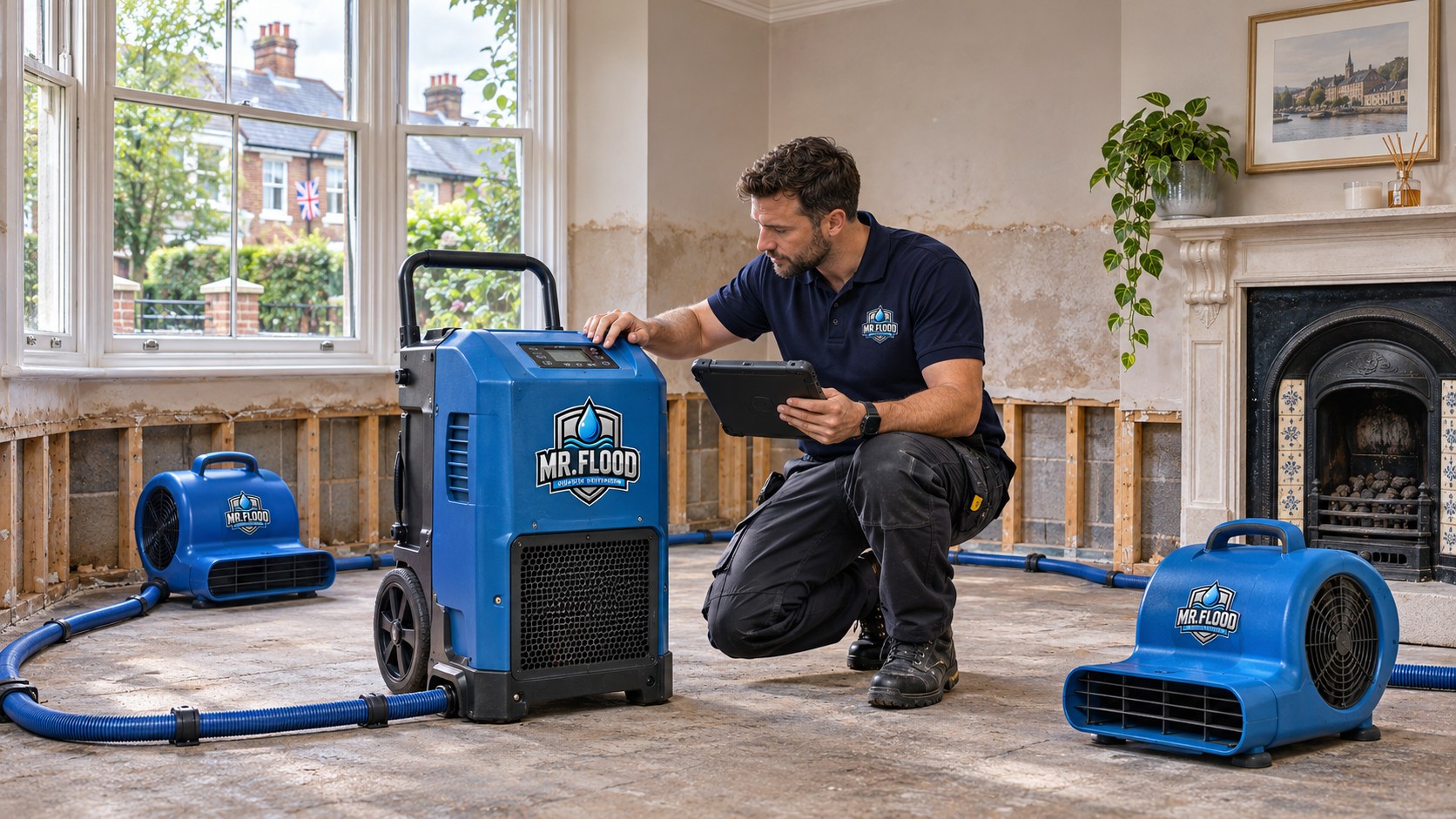
To prevent secondary damage, we set up industrial-grade dehumidifiers and air movers to rapidly dry the affected areas, maintaining strict control over humidity levels.
4. 📊 Continuous Monitoring:
We closely monitored moisture levels to ensure that the drying process was effective and that no hidden moisture remained, reducing the risk of mould growth.
5. ⏱ Minimal Downtime:
Thanks to our dedicated team working tirelessly through the night and into the morning, the dental surgery was able to resume operations quickly, minimising disruption to patient care.
🎯 Outcome
Through rapid response and meticulous execution, we were able to:
✅ Remove all floodwater efficiently
✅ Prevent further damage and contamination
✅ Minimise operational downtime, allowing the dental surgery to continue serving its patients
The organisation was extremely satisfied with the results and relieved to have avoided prolonged closures or costly repairs.
Another emergency handled with precision by Mr. Flood Ltd, where we turn crises into quick recoveries. 💪

Comments