
Persistent Damp Issues Resolved – A Comprehensive Remediation Project 🏠💧
We recently attended a property plagued by persistent damp issues that had been causing concern for the homeowner for quite some time. Our team was called in to assess the situation, identify the root cause, and devise an effective plan to remediate the problem and eradicate the moisture issues for good. ✅
🔍 Assessment & Initial Findings
Upon arrival, our experienced team conducted a thorough assessment of the property. It was clear that the damp issue had been ongoing, and we suspected that the prolonged moisture exposure had compromised not just the surface but the structural integrity of the affected wall.
To investigate further, we carefully removed the plaster from the affected area, as we feared potential brickwork damage hidden beneath.
💡 The Root Cause & Associated Risks
Our concerns were quickly confirmed—spalled brickwork was evident throughout the wall. Spalling occurs when water infiltrates the brick, causing it to deteriorate, flake, and crumble over time. This is often a result of:
🌧 Prolonged moisture exposure from leaks, poor ventilation, or rising damp.
❄ Freeze-thaw cycles where trapped water expands and contracts, weakening the bricks.
🏚 Inadequate external protection from weather elements, allowing water ingress.
If left untreated, spalled bricks can lead to:
⚠ Severe structural damage, as the brickwork loses its strength and stability.
🦠 Increased risk of mould growth, posing health hazards.
💸 Escalating repair costs, as the damage worsens over time.
Interestingly, we discovered a thick internal render beneath the plaster, suggesting that this area had faced historical damp issues. Unfortunately, such renders can trap moisture within the walls, making the problem worse instead of resolving it.
🛠 Our Remediation Plan
To effectively tackle the issue, we implemented a comprehensive plan:
1. 🚪 Removal of Vapour Barriers:
All internal plaster and render were stripped from the affected areas to allow the brickwork to “breathe” and facilitate proper drying.
2. 🧼 Sanitisation:
We thoroughly sanitised the exposed areas to eliminate any potential mould spores, reducing the risk of cross-contamination within the property.
3. 💨 Drying Programme:
A targeted drying programme was set up. We encapsulated the affected area to focus our drying efforts, using specialist equipment to expedite the process while maintaining control over humidity and temperature levels.
4. 📊 Monitoring:
The area was closely monitored, with regular moisture content readings to track progress. We ensured the brickwork reached safe, acceptable moisture levels before proceeding further.
5. 🔧 Repair & Restoration:
Once the drying process was complete:
The damaged brickwork was repaired and treated.
An antimicrobial repellent was applied to prevent future microbial growth.
A waterproof barrier was installed to provide long-term protection against moisture ingress.
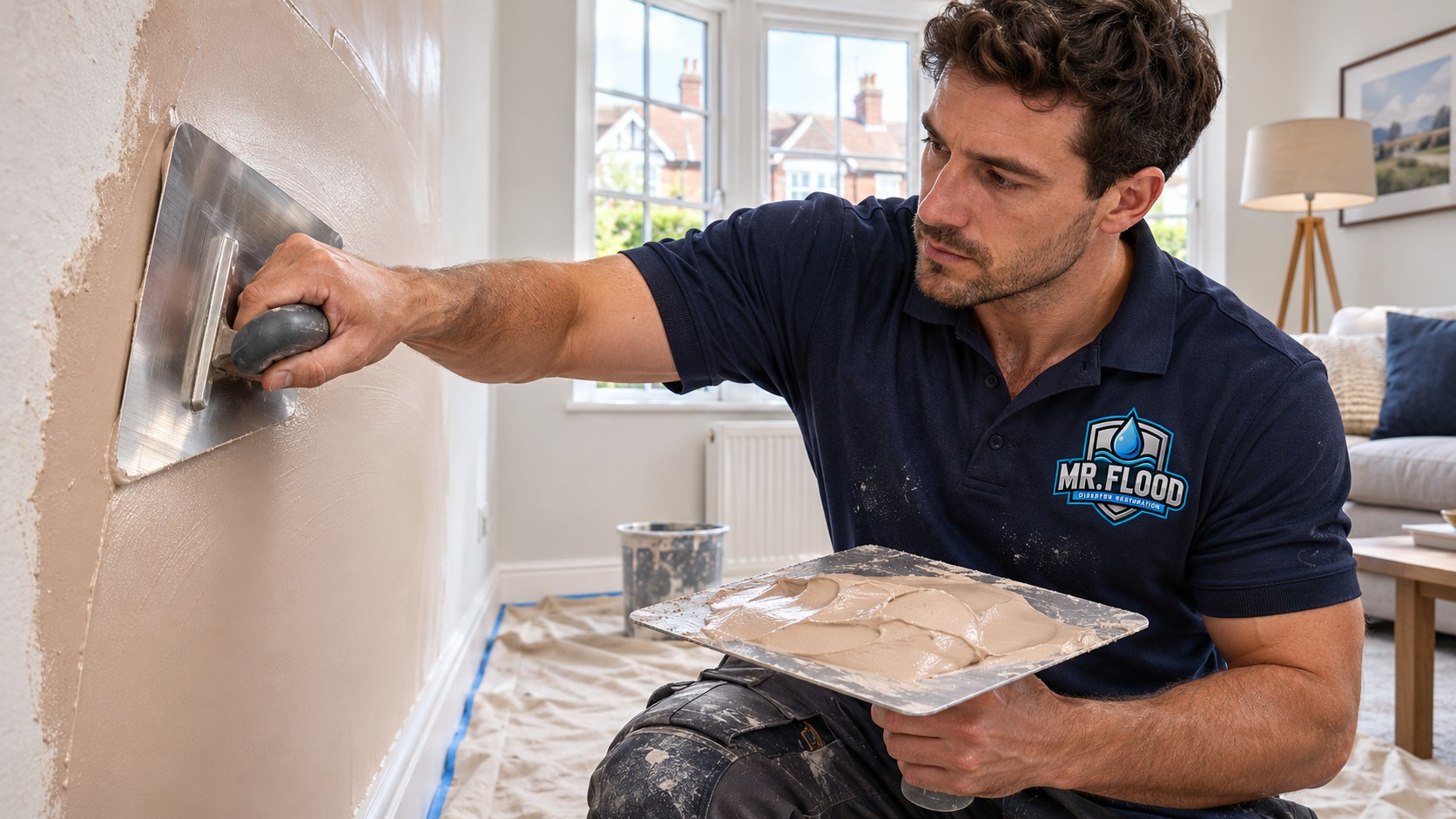
Finally, fresh plaster was applied, restoring the property to its former glory. ✨
🎯 Outcome
Thanks to our systematic approach and attention to detail, we were able to:
✅ Eliminate the persistent damp issues
✅ Reinforce the property’s structural integrity
✅ Prevent future moisture-related problems
The homeowner was delighted with the results—and the peace of mind that came with knowing the issue was resolved the right way.
Another successful project completed by Mr. Flood Ltd, where we don’t just cover up problems—we solve them! 💪


Comments